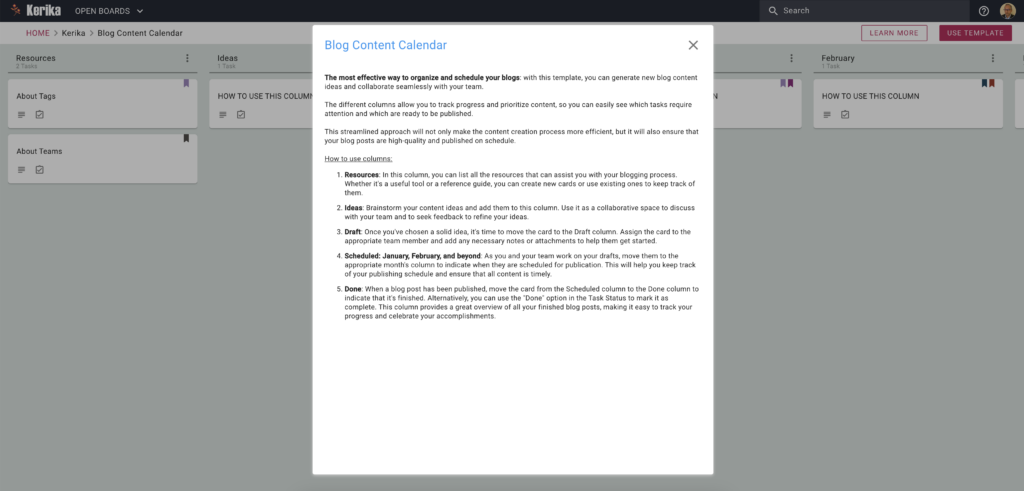
The most effective way to organize and schedule your blogs: with this template, you can generate new blog content ideas and collaborate seamlessly with your team.
The different columns allow you to track progress and prioritize content, so you can easily see which tasks require attention and which are ready to be published.
This streamlined approach will not only make the content creation process more efficient, but it will also ensure that your blog posts are high-quality and published on schedule.
How to use columns:
Resources: In this column, you can list all the resources that can assist you with your blogging process. Whether it’s a useful tool or a reference guide, you can create new cards or use existing ones to keep track of them.
Ideas: Brainstorm your content ideas and add them to this column. Use it as a collaborative space to discuss with your team and to seek feedback to refine your ideas.
Draft: Once you’ve chosen a solid idea, it’s time to move the card to the Draft column. Assign the card to the appropriate team member and add any necessary notes or attachments to help them get started.
Scheduled: January, February, and beyond: As you and your team work on your drafts, move them to the appropriate month’s column to indicate when they are scheduled for publication. This will help you keep track of your publishing schedule and ensure that all content is timely.
Done: When a blog post has been published, move the card from the Scheduled column to the Done column to indicate that it’s finished. Alternatively, you can use the “Done” option in the Task Status to mark it as complete. This column provides a great overview of all your finished blog posts, making it easy to track your progress and celebrate your accomplishments.
The transition to remote work has been swift, and digital tools have become the backbone of modern workplaces. However, the landscape of remote work is still fairly new and many teams are still far from their greatest potential. Still, if they polish their processes, remote teams can be as productive as they would on-site, and even more. This article will present digital tools essential to optimize digital workplace workflows and productivity.
Project Management Tools
Project management tools are the backbone of any team’s workflow. Project management tools centralize your team’s tasks and projects, enabling employees to manage tasks, deadlines, and resources.
Use a project manager to track progress and identify any bottlenecks. Likewise, logging tasks and project information adds a layer of transparency and accountability to project management tools.
In any case, your workflow can only be as good as the project management software you use allows you to. Some of the most popular project management tools available include Asana, Trello, and Basecamp. However, Kerika stands out from the rest by its own merits.
Kerika: The Ultimate Management Tool for Remote Teams
Kerika is a powerful project management tool that helps teams work efficiently and collaboratively. It offers a variety of features to meet the requirements of the most demanding users. Here are some of the features that make Kerika a must-have tool for any digital workplace:
Visual Boards. Whiteboards and task boards from which users can see the big picture of a project. Visualize the workflow and identify any bottlenecks at a glance.
Integrated Chat. This feature eliminates the need for external communication tools to collaborate since team members can communicate in real-time without leaving the platform.
Task Assignments. Easily assign tasks to team members and track their progress in a complex yet intuitive tasks board. Ensure that everyone is aware of their responsibilities and deadlines, making it easier to complete projects on time.
Customizable Templates. Kerika offers customizable project board templates that can be used for different types of projects. Save time and ensure that all team members are on the same page. Plus, templates are handy for onboarding new employees into your workflow.
User-Friendly Interface. Kerika’s user-friendly interface makes it easy to navigate and use, so everyone on the team can use the tool without any training or technical expertise.
File Sharing and Collaboration Software
File-sharing software enables employees to store and work with files no matter where they are located and from multiple devices. Such flexibility reduces the time and effort needed to search for documents or to track down the latest version of a file, something methodic and disorganized employees enjoy alike.
File-sharing tools such as Google Drive also enable multiple people to collaborate on the same document simultaneously, opening the possibility of real-time feedback and faster completion of tasks. In like manner, users can easily leave comments and make suggestions.
Administrators can easily control who has access to specific files or folders, ensuring that confidential information is kept secure. Permissions can be set to allow different levels of access to different users, making it easy to share files with only those who need to see them.
Communication Platforms
Effective communication is key to a successful digital workplace. With communication platforms such as Slack, Microsoft Teams, and Zoom, team members can stay connected and work together seamlessly through video and audio calls, and screen and file sharing.
On the other hand, video conferencing tools with virtual reality (VR) technology are a more cutting-edge option. VRth finds industrial applications in industries such as architecture and engineering by allowing teams to visualize and interact with 3D models Yet, VR can also work as a space for brainstorming, meetings, and events. To know more about VR meeting platforms, check Virbela and NextMeet.
Cybersecurity Tools
Cybersecurity tools such as firewalls, and intrusion detection systems help businesses to protect their data from cyber threats. On the other hand, these tools also help businesses to comply with data protection regulations such as the General Data Protection Regulation (GDPR) and the California Consumer Privacy Act (CCPA).
Additionally, virtual private networks (VPNs) are essential for any business that values data privacy and security. VPNs create a secure and encrypted connection between a business’s network and the internet, preventing unauthorized access to sensitive information. VPNs are especially important for remote workers who need to access company resources from outside the office. Here is a list of some of the cheapest VPNs.
Process Automation Software
Business process management software can help businesses streamline their operations by automating repetitive tasks and workflows, including data entry, invoice processing, and customer service.
Besides, artificial intelligence (AI) technology is increasingly being used to improve productivity in the digital workplace, taking care of complex tasks and clearing humans from them. AI-powered productivity tools can help automate tasks, provide personalized insights and recommendations, and analyze data to identify opportunities for improvement. Tools of this kind include beautiful.ai, for coming up with presentations, and Mem made to organize information.
Mind Mapping Software
Mind mapping software can help teams visualize and organize complex ideas and concepts through brainstorming, planning, and collaborating. Among popular mind-mapping tools, we find MindMeister, MindManager, and XMind.
On the other hand, digital whiteboards can help teams collaborate and brainstorm more effectively, especially in remote settings: Visualize ideas by drawing or writing them, or share them with others and receive feedback. Popular digital whiteboard tools include Miro, Google Jamboard, and Microsoft Whiteboard.
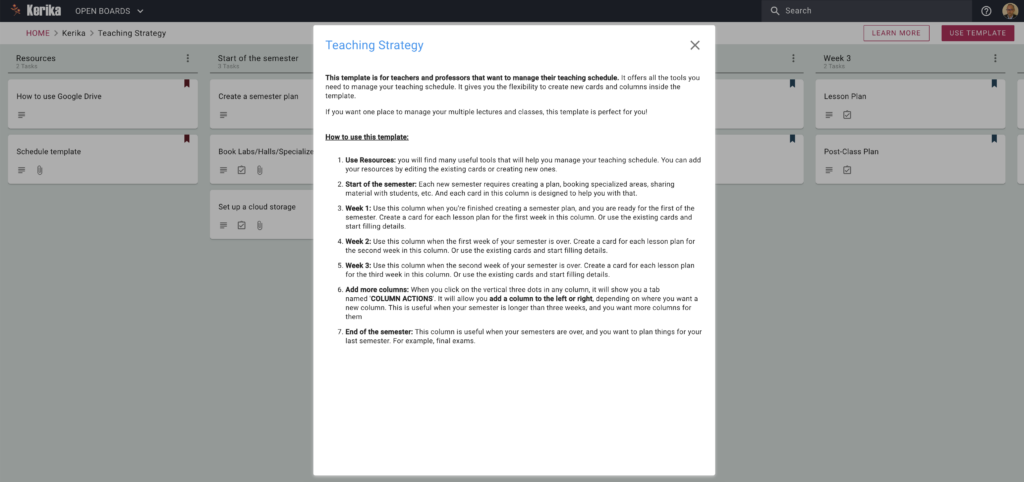
This template is for teachers and professors that want to manage their teaching schedule. It offers all the tools you need to manage your teaching schedule. It gives you the flexibility to create new cards and columns inside the template.
If you want one place to manage your multiple lectures and classes, this template is perfect for you!
How to use this template:
Use Resources: you will find many useful tools that will help you manage your teaching schedule. You can add your resources by editing the existing cards or creating new ones.
Start of the semester: Each new semester requires creating a plan, booking specialized areas, sharing material with students, etc. And each card in this column is designed to help you with that.
Week 1: Use this column when you’re finished creating a semester plan, and you are ready for the first of the semester. Create a card for each lesson plan for the first week in this column. Or use the existing cards and start filling details.
Week 2: Use this column when the first week of your semester is over. Create a card for each lesson plan for the second week in this column. Or use the existing cards and start filling details.
Week 3: Use this column when the second week of your semester is over. Create a card for each lesson plan for the third week in this column. Or use the existing cards and start filling details.
Add more columns: When you click on the vertical three dots in any column, it will show you a tab named ‘COLUMN ACTIONS‘. It will allow you add a column to the left or right, depending on where you want a new column. This is useful when your semester is longer than three weeks, and you want more columns for them.
End of the semester: This column is useful when your semesters are over, and you want to plan things for your last semester. For example, final exams.
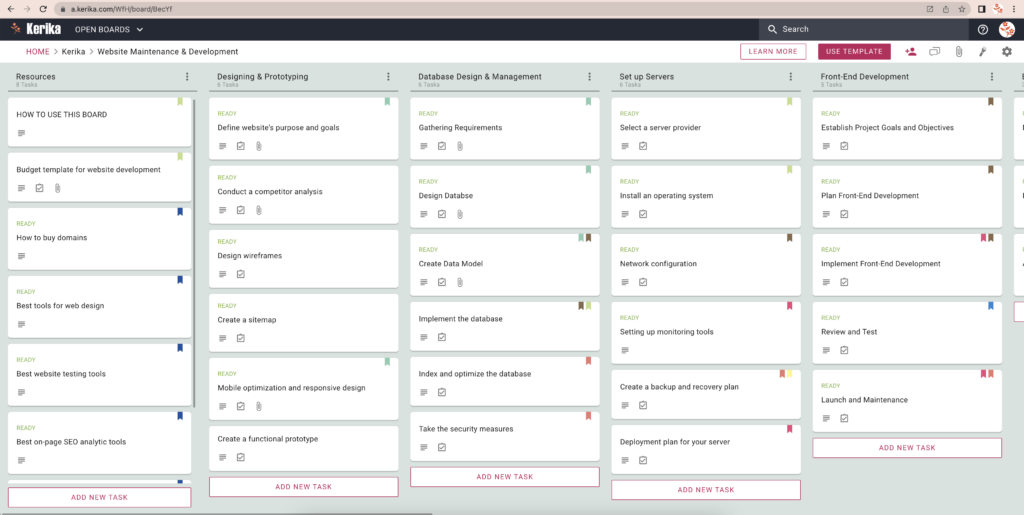
This template can be used by software and IT teams to handle website development and maintenance projects.
It comes with helpful resources and suggestions, and all the tasks that are typically needed in such projects.
How to use this template:
The first column on this board is Resources: the cards in here are not tasks, but instead contain helpful resources.
Start with the Resources column and open the cards. If the card’s suggestions and tips seem helpful, leave the card here for future reference; otherwise move the card to the Trash column.
Next, start with the Design column and open the cards one-by-one, starting with the topmost.
Cards can be assigned to people and scheduled; as work gets underway, make sure the tasks are properly assigned so everyone knows who is doing what, and when to expect deliverables.
While work is underway mark the card as IN PROGRESS (using the Task Status): this will let everyone on the team know that someone is working on the task.
If a card needs to be reviewed by someone, assign the card to that person (or persons), and mark the Task Status as NEEDS REVIEW. This will make it easy for everyone on this board’s team to know what’s going on. The people who were assigned the task will get notified.
Sometimes tasks will need rework; in that case use the NEEDS REWORK task status to indicate that. When someone discovers that a task needs rework, it’s a good practice for that person to document their concerns using the task’s chat tab before assigning it to the people who need to rework it.
Other useful task status are:
ON HOLD: this conveys to the team that work has been temporarily been stopped on a particular task, usually because the people involved got pulled away to work on something more urgent.
BLOCKED: this conveys that work on the task is blocked. It’s best practice for the team to unblock cards as soon as possible. When marking a card as BLOCKED, make sure you document the reason why, using the task’s Chat tab.
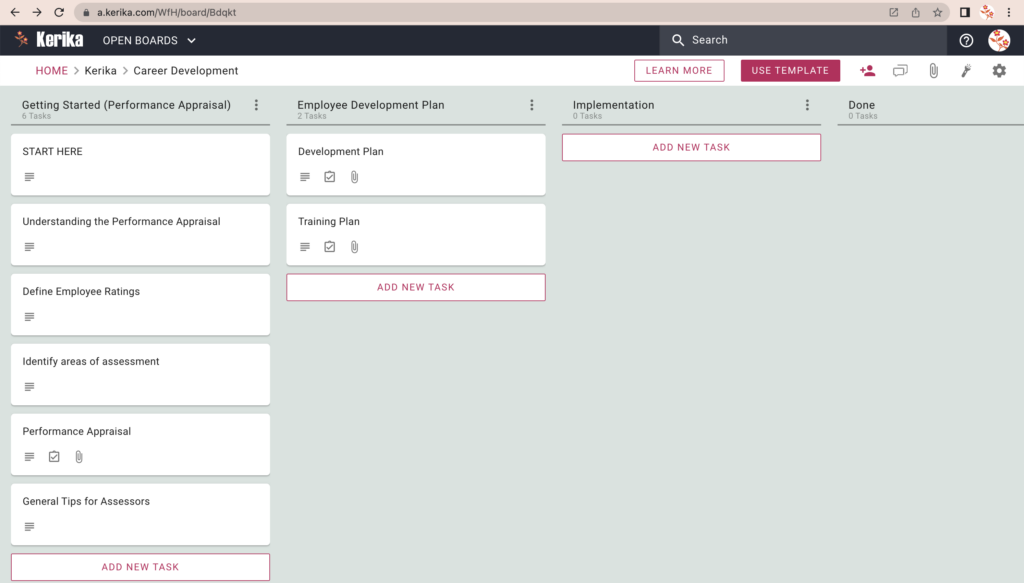
This template can be used to set goals and deliverables, assess performance, manage career growth, and get needed training to master knowledge and skills.
Performance management and career development is an ongoing process: it’s not done just once a year; it requires continuous follow-up, adjustment when needed, and giving feedback.
Your main deliverables:
Matching an employee’s performance to desired objectives
Identifying and addressing performance gaps
Implementing personal development plans
Assessing the employee’s performance after implementation
How to use this template:
Click on the USE TEMPLATE button on the top-right of the app and create your own Task Board; Kerika will set it up as using this template.
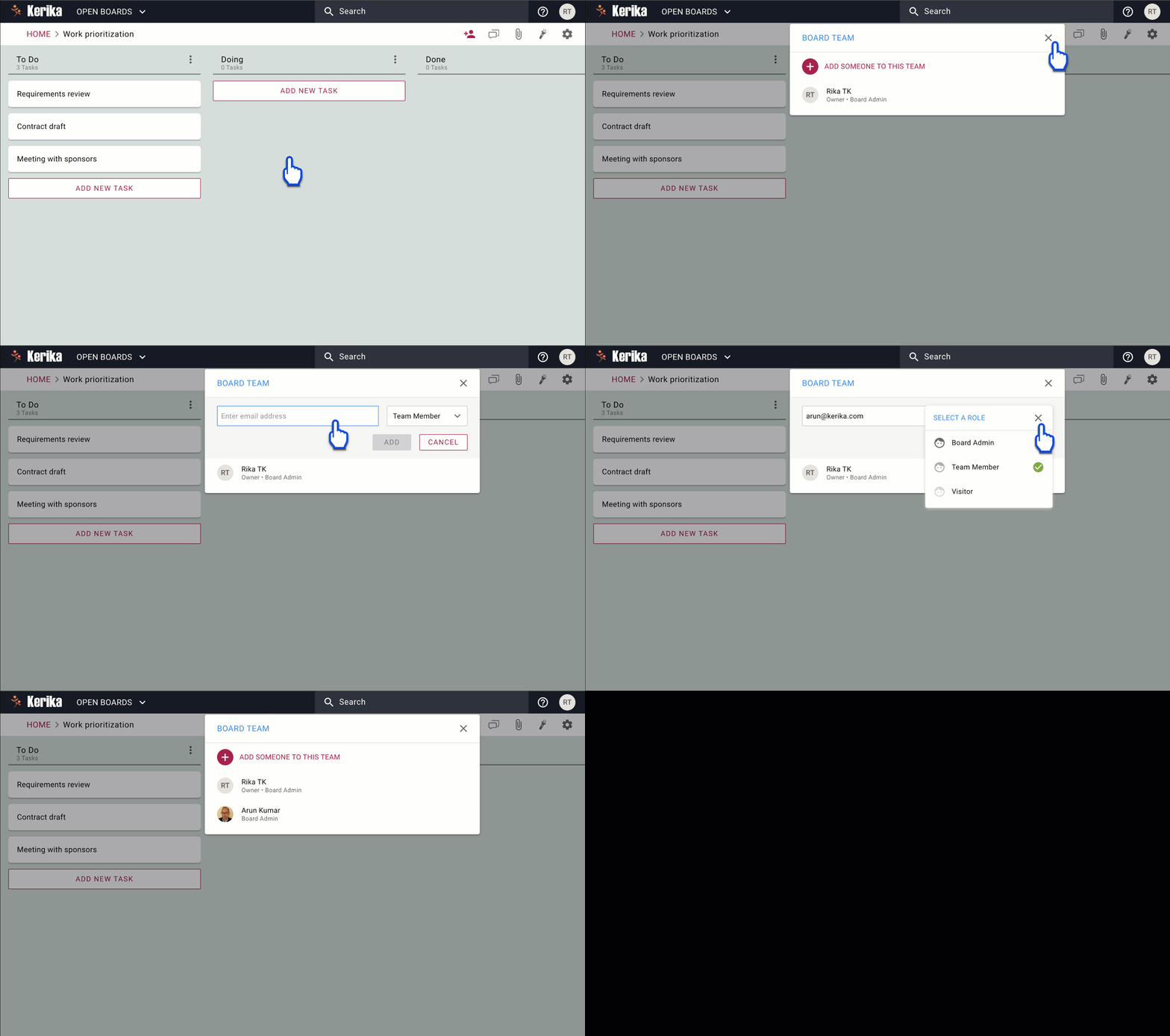
If you are going to do it with others, add the people to this board’s team as Team Members. (Use the Board Team button on the top-right of the board.)
If you have other stakeholders, e.g. management, add them as Visitors to this Board Team: they will be able to see what’s going on, but not make any changes.
Start with the leftmost column, and pick up tasks one by one:
The tasks are in order, so start at the top.
Set the status of the task to IN PROGRESS so everyone knows that it has started.
Assign the task to yourself or your Team Members: you can assign tasks to more than one person.
Set a due date! This really helps in getting stuff done; Kerika will then alert you when things are slipping.
As work proceeds, use the chat feature to communicate within the team.
As you take photos or create contracts, be sure to add them to the tasks as attachments; Kerika will make sure they stay with the tasks so they are always easy to find.
Once a task completes, move it to the Done column.
This template can help you gather your designers, creatives, and other stakeholders to discuss and review your design projects, share updates and feedback, and collaborate to find design solutions.
It gives you a structured layout that includes design ideas, project updates, and feedback option. If you want one place to manage your multiple design projects and ideas, this template is perfect for you!
How to use this template:
Use Resources: Use this column to gather useful tools and content that will help with the design project. You can use the existing resources as a starting point, and start adding your resources down the line.
Concepts & Ideas: List your design concepts and ideas in this column. Collaborate and discuss ideas with your teammates, and decide which idea is the best to work on.
In Progress: Once you decide which design idea to work on, create a card or move the card you already created to this column. Update the card regularly so other teammates know what’s going on.
In Review: When the task is completed, move the card from the ‘In Progress’ column to this column. In this column, you can ask the stakeholders for feedback or review your work.
Implementation: Once your task is reviewed, and everyone is happy with the design, move the card to this column for the implementation.
Done: After implementing the design, simply mark it as ‘Done’ or move to this column.
To succeed on social media, you need to create content that people will find interesting and engaging. But making good content takes a lot of time and effort, and a great workflow can make all the difference. A workflow helps you be more efficient and make sure everything you’re doing is in the right order, and that you’re not overlooking anything important.
Kerika can get you started in seconds with a great workflow for managing your social media content.
Let us show you how you can use this template to create content that connects with your audience and helps you grow your business or personal brand.
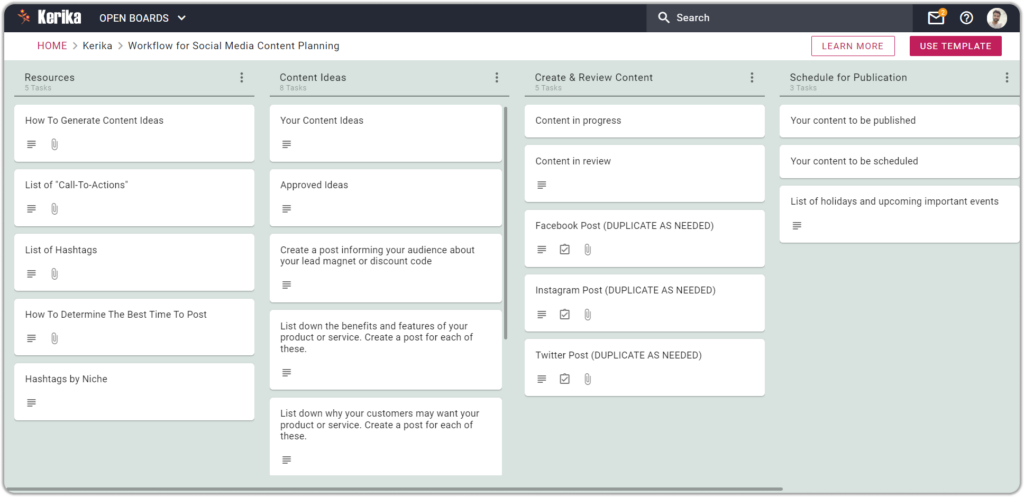
This template organizes your workflow using cards and columns. Each column represents a different step in the workflow starting with Resources on the left edge of the board, and ending with Done on the right edge.
Let’s learn how you can use these columns for your Social Media content creation process:
Resources: If you want to create content quickly, you need to make sure your resources are easily available. This might include things like pictures, videos, or documents.
You can add more resources in this column too by creating a new card or adding more information to the existing cards. By taking the time to build resources, you’ll create quality content easily and quickly.
Content Ideas: While creating content for your social media channels, you may struggle to come up with new ideas. A good solution for this problem is to have a list of ideas you can work on anytime.
This is why this column is useful to list down your content ideas, discuss them with your team, and see which content idea is the best to go ahead with.
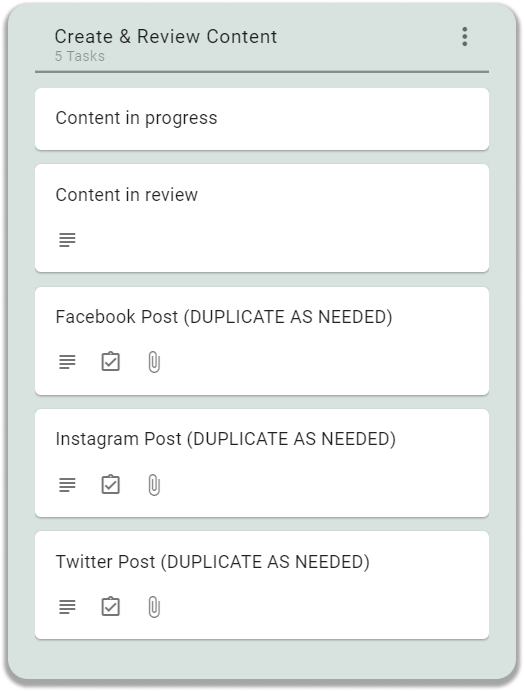
Create & Review Content: The success of your content depends on how well you manage and review it before posting, and this column is to manage your social media content and review it before posting.
You can mark your content as READY, IN PROGRESS, NEEDS REVIEW, and more. The status flags help to keep everyone on the same page, especially folks who may be working remotely.
Schedule for Publication: You want to use the best time to post so that you can get the most engagement from your audience. You also want to be able to track when you are publishing and scheduling your posts. Use this column to schedule when you will post your content on social media. By planning the timing of your content’s release, you can increase its visibility and performance.
Best Practices of Great Teams
If you are working just by yourself, you are ready to go. But if you are working for an agency or the Marketing department of a company, there will be others you need to get involved in this project.
Set up your Team Members
Kerika makes it really easy to organize your team: if there are people who will be actively involved in the video production, e.g. photographers or content writers, add them as Team Members on this board.
They will be able to make changes to this board in real-time, as they get their pieces ready, and everything that they do will be instantly accessible to everyone else that’s on this board’s team.
Set up your Visitors
There are often people who need to be informed but aren’t necessarily going to contribute in an active way. For example, there may be a product owner who needs to keep track of videos that are relevant to their product, or a senior manager who wants to be kept in the loop.
Add these stakeholders as Visitors to this board team: they will always have a real-time view of what’s going on, but they won’t be able to move any cards or make any changes (in other words, mess up with your careful workflow!) and you won’t have to keep giving status reports. That’s a double-win.
Oh, and Visitors are always free. So let’s call that a triple-win.
Understand the Workflow
In a Kerika board, every column represents a particular stage in a workflow, and every card represents a specific task (e.g. a video that needs to be produced).
Start at the top-left:
Open the first card in the first column
Read the instructions inside
Check out any resources that are attached to the card
Take action.
Some tasks are best handled by you, and others should clearly be handed off to coworkers.
Update the cards as work gets done
A card can be assigned to one or more people, and this can change throughout the course of the project: something is initially assigned to you and then gets handed off to someone else.
As cards get worked upon, update the status of each card: start with READY, then IN PROGRESS, and so on. This makes it easy for everyone to always have a clear idea of where things stand.
Set due dates. This will help you make sure nothing slips.
Use Kerika’s chat instead of email: this will keep your communications quick and focused.
Move cards along the columns as the work progresses.
Get to Done
The team’s goal is to get all your cards all the way over to Done, on the right end of the board.
Sometimes things that were initiated need to be discarded: maybe something turns out to be a bad idea? In that case, the card should be moved to the Trash column. (If you change your mind later, you can always retrieve items from the Trash.)
Start with Resources
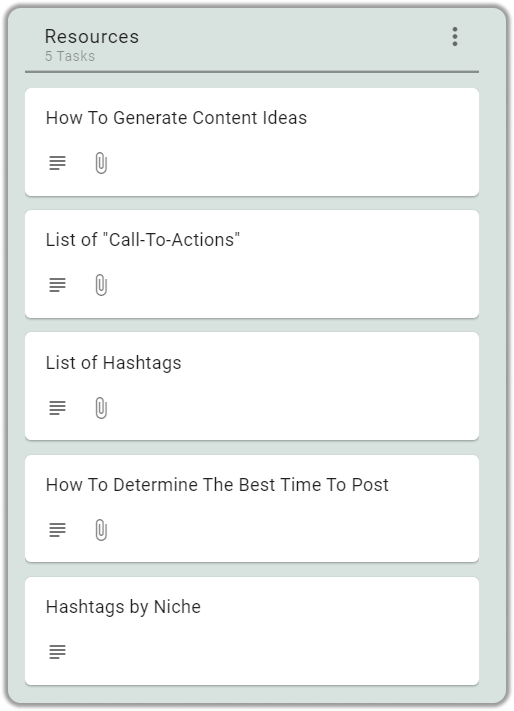
The Resources column, which is the leftmost column in this template, contains five cards:
Resources
How To Generate Content Ideas: If you’re struggling to create interesting and compelling content, this card has some useful tips and insights to help you overcome this challenge.You will also find articles and videos about how to make a good post and learn how to create engaging content that captures the attention of your audience.
List of “Call-To-Actions: CTAs, or calls to action, are important in social media posts because they help guide your audience towards taking a specific action, such as signing up for a newsletter, visiting a website, or making a purchase.In this card, you can find useful articles, videos, and some great examples of CTAs that will help you get started!
List of Hashtags: Hashtags are a great way to help your audience find your posts on social media. They are also used to create a community around a topic or event.In this card, you will find useful articles, and videos, that will help you find relevant hashtags! You can also use this card to list down your hashtags for later use.
Hashtags by Niche: To help you get started with hashtags, we have listed some of the most useful hashtags in this card. Please feel free to use relevant hashtags in your social media posts and increase the chances of your posts being seen by your audience.
Generate Content Ideas
The Content Ideas column, the second in this template, contains five cards:
Content Ideas
Your Content Ideas: Coming up with content ideas is a time-consuming process. That is why it is important to list down whenever you come across a good content idea.In this card, you can list all of your content ideas. And when it’s time to create content, you can simply open this card and pick the idea you like.
This will help you avoid feeling stressed out about trying to come up with something to create on the spot.
Approved Content Ideas: Sometimes, before you can share something online, you need to make sure it’s okay with your boss or the copyright team to make sure everything is legal.
In that case, you can list your approved ideas in this separate card.
Tips for post: It’s important to know what kind of post to create because different types of posts can have different effects on your audience. For example, a lead magnet post will attract more new visitors and customers.
This card will help you identify the type of content that will be most beneficial to your business.
Create & Review Content
The Create & Review Content column, which is the third column in this template, contains eight cards:
Create & Review Content
Social Media Guidelines, Policies, and Community Standards card: When you use social media platforms to promote your business, it’s important to follow their rules, also known as “community guidelines.”
You have to follow these community guidelines to avoid getting into trouble or getting banned from their platforms.This card has some main key points and useful links for you to keep in mind while posting on social media platforms.
Why is it important to review content?: It’s important to review your content before publishing it on social media for the quality and integrity of your social media presence.In this card, you will learn the importance of reviewing your content to help you be careful while publishing your content.
Facebook Post Template, Instagram Post Template, and Twitter Post Template cards: These three cards offer very useful templates to create posts for their respective social media platforms. These templates are useful for social media posts for several reasons. They can save time, provide inspiration, overcome creative blocks, maintain a consistent brand image, and create professional-looking posts.
(Example) Facebook Post For Christmas, (Example) Instagram Post for Black Friday, and (Example) Twitter Post for Father’s Day card: These cards are great examples of how you can create social media posts using each template. Open these cards to see how we’re using these templates to create social media posts for Christmas, Black Friday, and Father’s Day.
Schedule for Publication
The ‘Schedule for Publication’ Content column, which is the fourth column in this template, contains two cards:
Schedule for Publication
How To Determine The Best Time To Post card: When you share things on social media, you want as many people as possible to see them. One way to make sure more people see your posts is to share them when lots of people are online and using social media.
In this card, you will find an article and a video that can help to decide which time is for you to schedule and post your content.
List of holidays and upcoming important events card: Holidays and events can provide a great opportunity to connect with your audience and create a sense of community. By creating posts that relate to these events, you can show that you are in tune with their interests and values.
You can refer to this card whenever you are wondering when the next important public holiday or event is.
This card will make sure you don’t miss them.
Like what you just read?
Here’s the template: just one click, one the USE TEMPLATE button, will set you up with a new Kerika account and your first board, in just seconds.
You can try everything free, with your entire team, for 30 days.
If you’re a small business, startup, or big corporation, and you want to win in the digital marketing world, you have to be excellent at running your digital marketing campaigns. To make sure you’re excellent at this, you must have a solid way to run and track all the campaigns.
You’re probably using something that is not designed for this purpose, like a spreadsheet or emails, but they’re not efficient enough. This is why we have designed a template within Kerika that helps you handle all of your digital marketing campaigns, like a pro.
Kerika helps you plan and track your digital marketing campaigns easily.
Whether you’re working solo or as a part of a digital marketing team, Kerika has just the right tools to help you level up your online marketing game. Let’s see how you can use Kerika to plan and execute its digital marketing campaigns.
This template makes it easier to plan your digital advertising efforts by using cards and columns. The columns show different types of campaigns, starting with resources on the left and ending with completed campaigns on the right.
Let’s learn how you can use these columns for your online marketing campaigns:
Resources: Resources are the necessary fuel that helps you fire up your campaigns. You also need easy access to the policies of all the online marketing platforms. That way, you can ensure your campaigns are always on point and aligned with the latest rules. Refer to this column whenever you need a marketing tool or the policies of the online marketing platforms — it’s that simple.
Social Media Marketing Campaigns: This column is designed to help you streamline your social media campaigns. This column also offers templates to create ads for Facebook and Twitter. You can copy and edit this template for your ads. There is a template for managing your social media marketing budget as well.
Google Ads Campaign: You can plan, create and optimize your Google ads in this column. It gives you the option to create a card for each ad, or you can copy the existing templates and edit their content for your own Google ads.You can also easily manage all aspects of your Google ad, like creating an ad budget, assigning tasks to your team, creating the banner design, writing video scripts, etc.
Influencer Marketing Campaign: This column is to manage your influencer marketing efforts. It allows you to create cards for each campaign and provides templates for creating a budget and affiliate contracts. You can also assign tasks to your team members or assign campaigns to your influencers within the card.
Affiliate Marketing Campaign: This column helps you simplify the process of managing your affiliate marketing campaigns. You can create a separate card for each marketing campaign, making it easier for you to track and manage multiple campaigns simultaneously. It also offers ready-to-use templates and useful resources for planning your marketing budget.
Email Marketing Campaign: In this column, you can easily create and manage your email campaigns by creating a new card or duplicating the existing template. It also offers a template for creating email marketing budgets, so you can make sure that all financial aspects of your campaign are tracked and managed effectively.
Content Marketing Campaign: This column is designed to help you manage your content marketing efforts. You can create a card for each content piece or idea and have a clear and organized view of your entire content marketing strategy. You can also find budget templates, which allow you to effectively plan and track your content marketing spending.
Onboarding Your Digital Marketing Team in Kerika
If you are a solo digital marketer, you are ready to use this template. However, if you are leading a team within an agency or company’s digital marketing department, it is important to have others onboard correctly for greater success. Onboarding is really easy with Kerika
Invite your team
Most digital marketing teams are usually made of a social media expert, Google ad expert, email marketing expert, content writer, and a graphic Designer. Simply add them one by one as Team Members on this board.
Once added to the board, team members will be able to make real-time changes to the board and all the updates are instantly accessible to everyone. This makes collaboration and communication efficient throughout the campaign.
Set up your Visitors
In addition to granting team members access to the board, you can also give visitor access to stakeholders who need to view the progress of the campaign but do not need to make any changes.
Assign these stakeholders as Visitors to this board, so they can see what’s going on in real-time. However, they won’t be able to move any cards or make any changes. This means they accidentally won’t mess up your careful workflow, and you won’t have to keep giving status reports. That’s a double-win for both of you.
And the best part is, adding a Visitor on this board team is completely free. That makes it a triple-win situation for everyone!
Understand the campaign management
In this board, each column represents a specific type of campaign in the digital marketing process. The cards within each column represent individual tasks for that campaign, such as creating a display advertisement for Google ads.
To start working on the tasks in a Kerika board:
Open the first card in the first column
Review the instructions within the card
Examine any resources attached to the card
Take necessary actions.
It’s best for you to handle crucial tasks personally and delegate the others to your team members based on their areas of expertise.
Update the cards as the campaign makes progress
As your campaign makes progress, the tasks related to it may require more than one teammate. You can assign the same card to multiple teammates or use the checklist option to divide the tasks and assign them to your team.
Use the status option to indicate the status of your card. There are statuses such as READY, IN PROGRESS, REVIEW, etc. This will make it easy for everyone to know the status of that campaign without opening the card.
Use the DUE DATES to make sure the campaigns and tasks get done on time and nothing gets slipped.
Communicate with your team with Kerika’s chatoption instead of email. This make your communications more streamlined and focused
The ‘Done’ column
When your campaign is over, and the card no longer needs to be in the column, you can move it to the ‘Done’ column or just mark it as done.
The ‘Trash’ column
Sometimes campaigns don’t work out or they need to be stopped before the time. You can move those cards to the ‘Trash’ or just mark them as trash and the card will automatically be transferred to the trash column.
If you accidentally Trash the card or want to continue the past discarded campaigns, you can simply retrieve those cards from the Trash column the card will reinstate itself where it previously was.
Now that you know how to use the cards and how to move them around, let’s learn more about the cards you get with this template. These cards contain helpful content, and they are there to make your digital marketing campaign process a lot easier.
Start with the Resources column
This is the leftmost column in this template and contains 12 cards:
The cards in this column include helpful resources.
How to find ideas for your digital marketing campaign: This card is useful for you if you are looking for inspiration for your digital marketing campaigns. It provides helpful tips and suggestions to spark new ideas and get the creative juices flowing.Whether you’re planning a social media strategy or developing a new email marketing campaign, a card can be an invaluable resource.
Best social media marketing tools: This card gives you a comprehensive list of tools and suggestions for social media marketing. Whether you’re looking to schedule posts, measure your performance, or find the right hashtags, the card has you covered.With its curated selection of top-performing tools, it makes your digital marketing efforts a breeze. Keep this card handy to ensure your campaigns are always on point.
Facebook ad policies: The card comes in handy while creating Facebook ads. By opening the card, you can get a comprehensive overview of Facebook’s ad policies and ensure your ads comply with the latest guidelines.It will help you avoid the risk of your ads getting banned, which could negatively impact your marketing efforts.
Twitter ad policies and process The card feature provides a comprehensive overview of Twitter’s ad policies, making it a must-have resource for Twitter ads.By using this card, you can ensure your ads comply with Twitter’s guidelines, helping you avoid the risk of having your ads banned.
Reddit ad policies and process Whether you’re new to Reddit advertising or an experienced marketer, this card helps you ensure your ads comply with Reddit’s guidelines and avoid the risk of having them banned.Read this card to stay up-to-date with the latest policies and run effective ad campaigns on Reddit.
Google ad policies and process: This card offers a complete understanding of Google’s ad policies and procedures.After reading this card, you can be sure that your ads are in line with Google’s guidelines and that you steer clear of potential bank risks by simply accessing the card.
Google ad tool: By opening the card, you’ll have access to a wide range of tools to help you create, manage, and optimize your advertising campaigns.From crafting the perfect ad copy to analyzing performance metrics, the card has everything you need to succeed.
List of popular affiliate marketing platforms: In this card, you’ll get a variety of affiliate marketing platforms to choose from, making it easier for you to find the best fit for your specific needs and goals.Whether you’re looking for a platform with a high commission rate or one with a wide range of products, the card has you covered.
Must-follow rules for email marketing:This card gives you a comprehensive list of must-follow rules to ensure your email marketing efforts are effective and compliant.From crafting subject lines that grab attention to avoiding spam filters, the card covers it all.
Tips for running an effective email marketing campaign: In this card, you’ll get access to tips and best practices for running an effective email marketing campaign.From building your email list to crafting compelling subject lines, the card has everything you need to succeed.
How to write articles to the target audience?: Open the card to gain access to expert tips and strategies for running an effective email marketing campaign.From growing your email list to creating captivating subject lines, the card provides everything you need to know.
Tips for managing influencer marketing campaigns: From setting clear goals to negotiating fair compensation, this card provides step-by-step guidance on every aspect of influencer management.Discover best practices for identifying the right influencers, creating contracts, monitoring results, and building long-term relationships.
Social Media Marketing Campaign
The which is the second column in this template, contains seven cards:
Template cards for running social media marketing campaigns
Social Media Marketing Budget Template: You can streamline your social media marketing budget with the help of this card. Simply open the card and enter all the information about your platform, content creation, advertising, and reporting and analytics budget.With its customizable content, you can quickly and efficiently plan your budgets and track your progress toward your marketing goals. You can find more advanced budget planning options in the attachment.
Your Social Media Marketing Campaign Ideas: With the help of this card, you can keep your ideas organized and accessible. Simply open the card and add, edit, or delete concepts as they come to mind.With all your ideas in one place, you can easily refer to the card whenever you need inspiration for your next campaign.
Display Image Ad Template for Facebook Ads Campaign: This text-based template in the card helps you streamline your Facebook ad creation process. It gives you a preformatted structure to follow and guides you in filling in the necessary details and messaging.By using this template, you can effortlessly produce a professional and impactful Facebook ad.
Video Ad Template for Facebook Marketing Campaign: In this card, there is a layout for creating professional and effective video ads for YouTube effortlessly.The preformatted layout simplifies the process, just fill in the blanks with your details and messaging, and you’re ready to launch on the world’s largest video platform.
Display Ad Template For Twitter Ads Campaign: This card offers a text-based pre-designed structure to help you create Twitter banner ads quickly and efficiently.Fill in the blanks with your details and messaging, and it will help you create a professional and effective ad ready to promote copy.
Video Ad Template For Twitter Ads Campaign: You can use this card to create video ads for your Twitter campaigns.Customize it with your own text, images, and other elements to effectively promote your products, events, or services on Twitter.
Like what you read so far?
Just like the Social Media Marketing Campaign column, there is a column for Google Ads, Influencer Marketing, Affiliate Marketing, Email Marketing, and Content Marketing.
These columns will help you store your campaign ideas, generate great copies, manage your budget, and more. Click here to check out the template
You can try everything free, with your entire team, for 30 days.
Producing great video content is essential to a successful YouTube channel, but it can be a time-consuming task if you don’t have a proper process and workflow.
A very helpful tool for planning your content workflow is the Kanban board.
Kanban boards, like Kerika’s Task Boards, can help you plan and execute your video production process, ensuring that each step is completed in a timely and efficient manner.
In this article, we will show you how you can use Kerika to set up a great workflow and process for your YouTube video production.
A Workflow for You
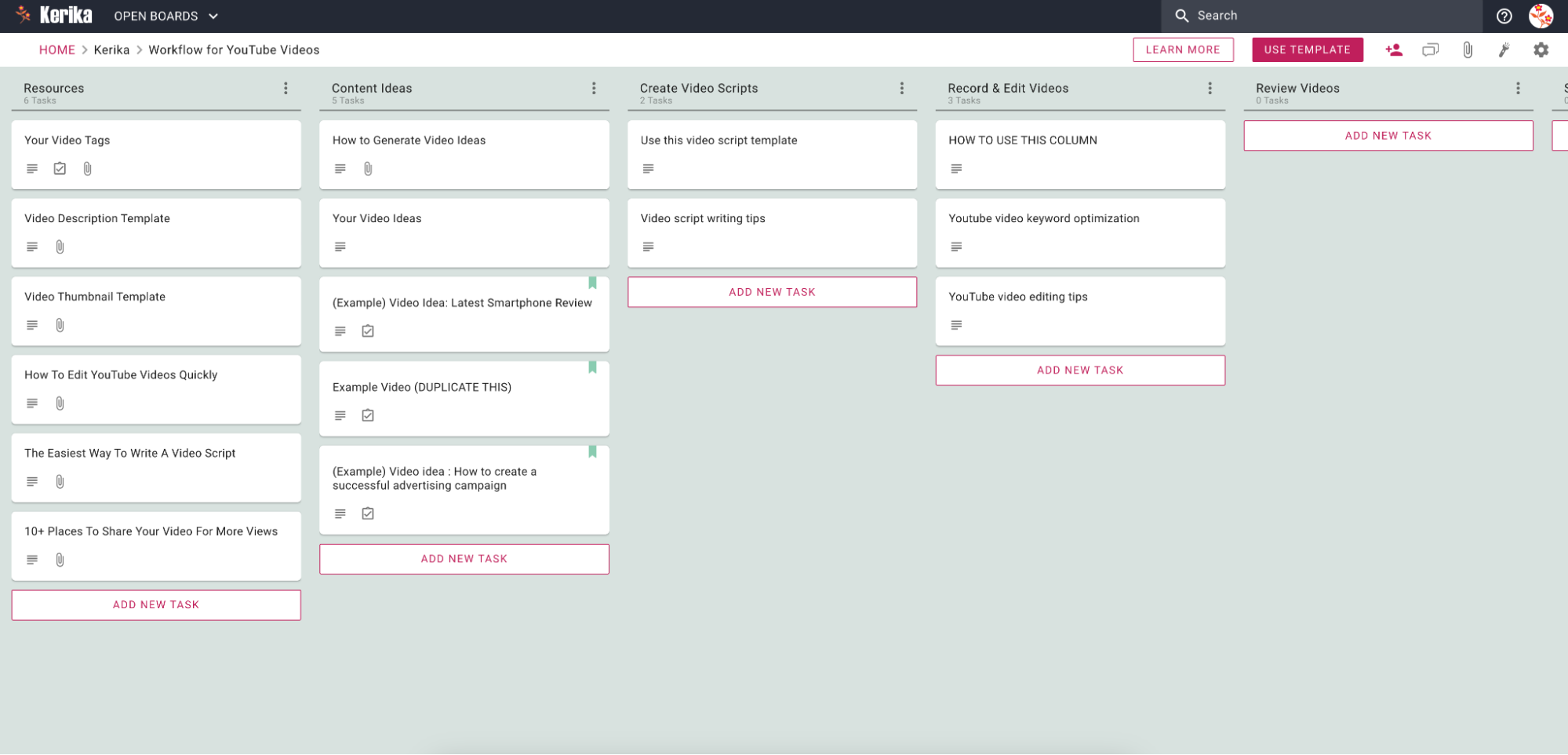
This template will set you up with a good workflow. Each phase of this workflow is represented by a column; let’s take a look from left to right:
Click to view this Template
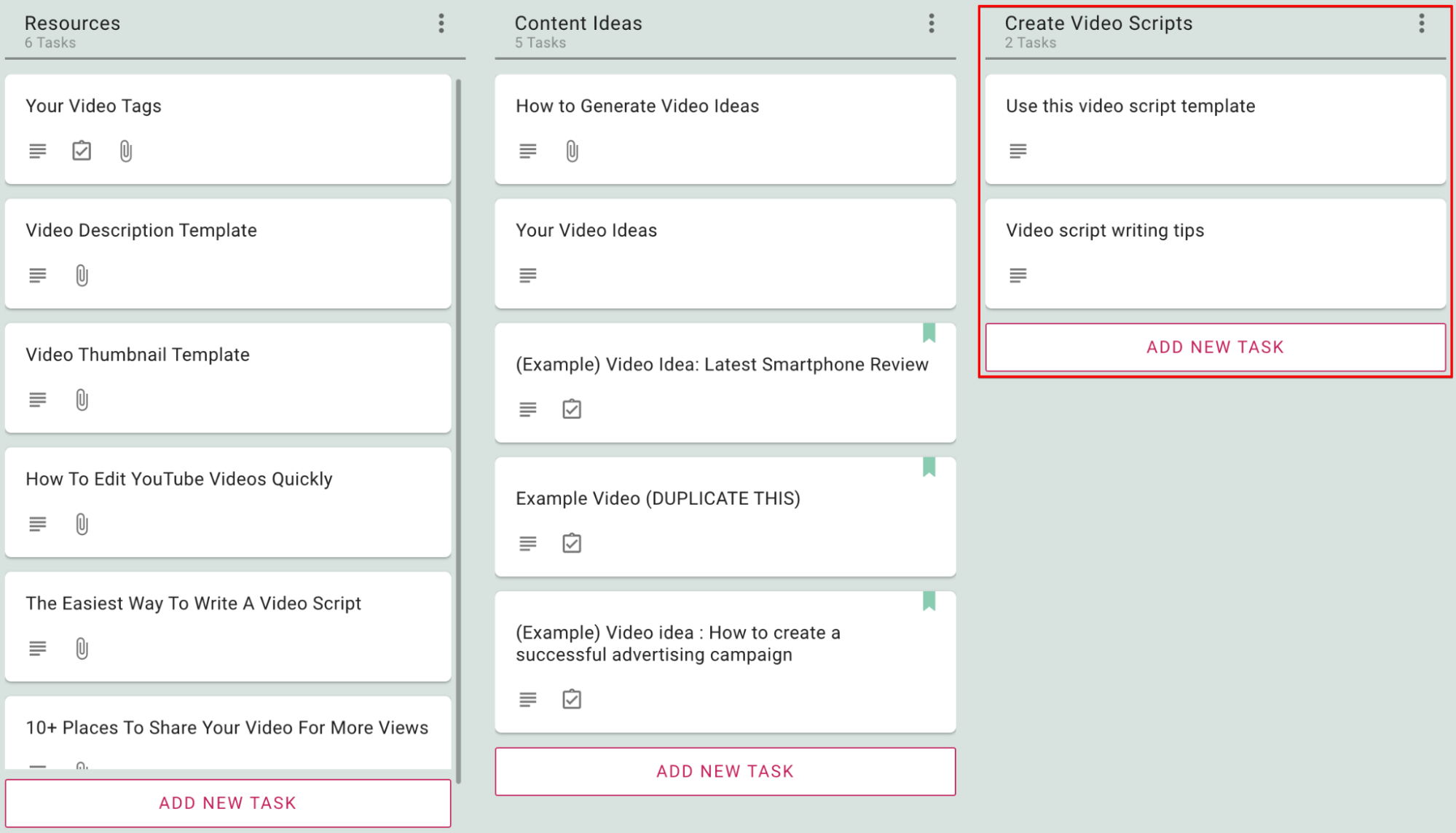
Resources
The cards in this column contain helpful resources for you to get started with. The first card, for example, helps you understand how to use video tags; the second card provides a guide for how to write a good video description. And so on.
Content Ideas
This is where you start to gather all your ideas for different videos. If you are having trouble coming up with ideas, take a look at the first card in this column.
Create Video Scripts
When you have decided a specific topic you want to work on, move its card from Content Ideas to this column and start writing your script. (And there’s a card in this column with some really useful tips on writing a template for a script.)
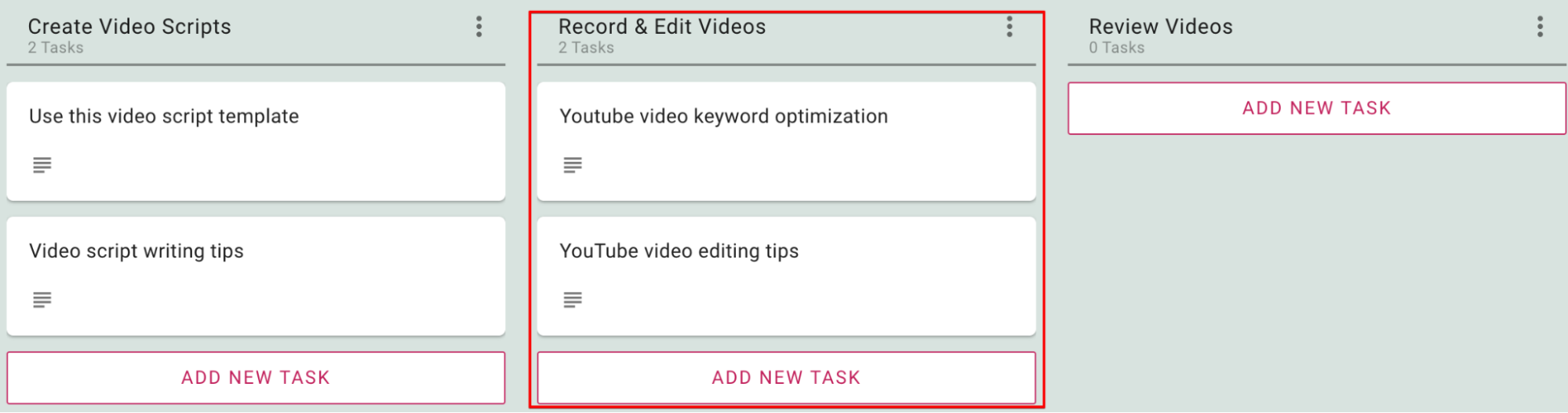
Record & Edit videos
Use this column to track the videos you are currently working on: once your script is ready, move the video’s card from the Create Video Script column to this column. This helps you keep track of the videos that are currently in production.
Review Videos
Once everything related to a particular is done, move its card to this column. This will help you track videos that are finished, but you haven’t published them yet.
Schedule / Publish Videos
When you have decided when to publish a video, move its card to this column. This way you and your teammates know which video is when going live. Kerika will remind you if you scheduled a video but forgot to publish it.
Promote Videos
Promoting videos is essential to growing your YouTube channel: once a video is published, move its card to this column and create a checklist of where your videos should be shared and promoted.
Best Practices of Great Teams
If you are working just by yourself, you are ready to go. But if you are working for an agency or the Marketing department of a company, there will be others you need to get involved in this project.
Set up your Team Members
Kerika makes it really easy to organize your team: if there are people who will be actively involved in the video production, e.g. photographers or content writers, add them as Team Members on this board.
They will be able to make changes to this board in real-time, as they get their pieces ready, and everything that they do will be instantly accessible for everyone else that’s on this board’s team.
Set up your Visitors
There are often people who need to be informed, but aren’t necessarily going to contribute in an active way. For example, there may be a product owner who needs to keep track of videos that are relevant to their product, or a senior manager who wants to be kept in the loop.
Add these stakeholders as Visitors to this board team: they will always have a real-time view of what’s going on, but they won’t be able to move any cards or make any changes (in other words, mess up with your careful workflow!) and you won’t have to keep giving status reports. That’s a double-win.
Understand the Workflow
In a Kerika board, every column represents a particular stage in a workflow, and every card represents a specific task (e.g. a video that needs to be produced).
Start at the top-left
Open the first card in the first column
Read the instructions inside
Check out any resources that are attached to the card
Take action.
Some tasks are best handled by you, and others should clearly be handed off to coworkers.
Update the cards as work gets done
A card can be assigned to one or more people, and this can change throughout the course of the project: something is initially assigned to you and then gets handed off to someone else.
As cards get worked upon, update the status of each card: start with READY, then IN PROGRESS, and so on. This makes it easy for everyone to always have a clear idea of where things stand.
Set due dates. This will help you make sure nothing slips.
Use Kerika’s chat instead of email: this will keep your communications quick and focused.
Move cards along the columns as the work progresses.
Get to Done
The team’s goal is to get all your cards all the way over to Done, on the right-end of the board.
Sometimes things that were initiated need to be discarded: maybe something turns out to be a bad idea? In that case, move the card to the Trash column. (If you change your mind later, you can always retrieve items from the Trash.)
Kerika gives you Resources
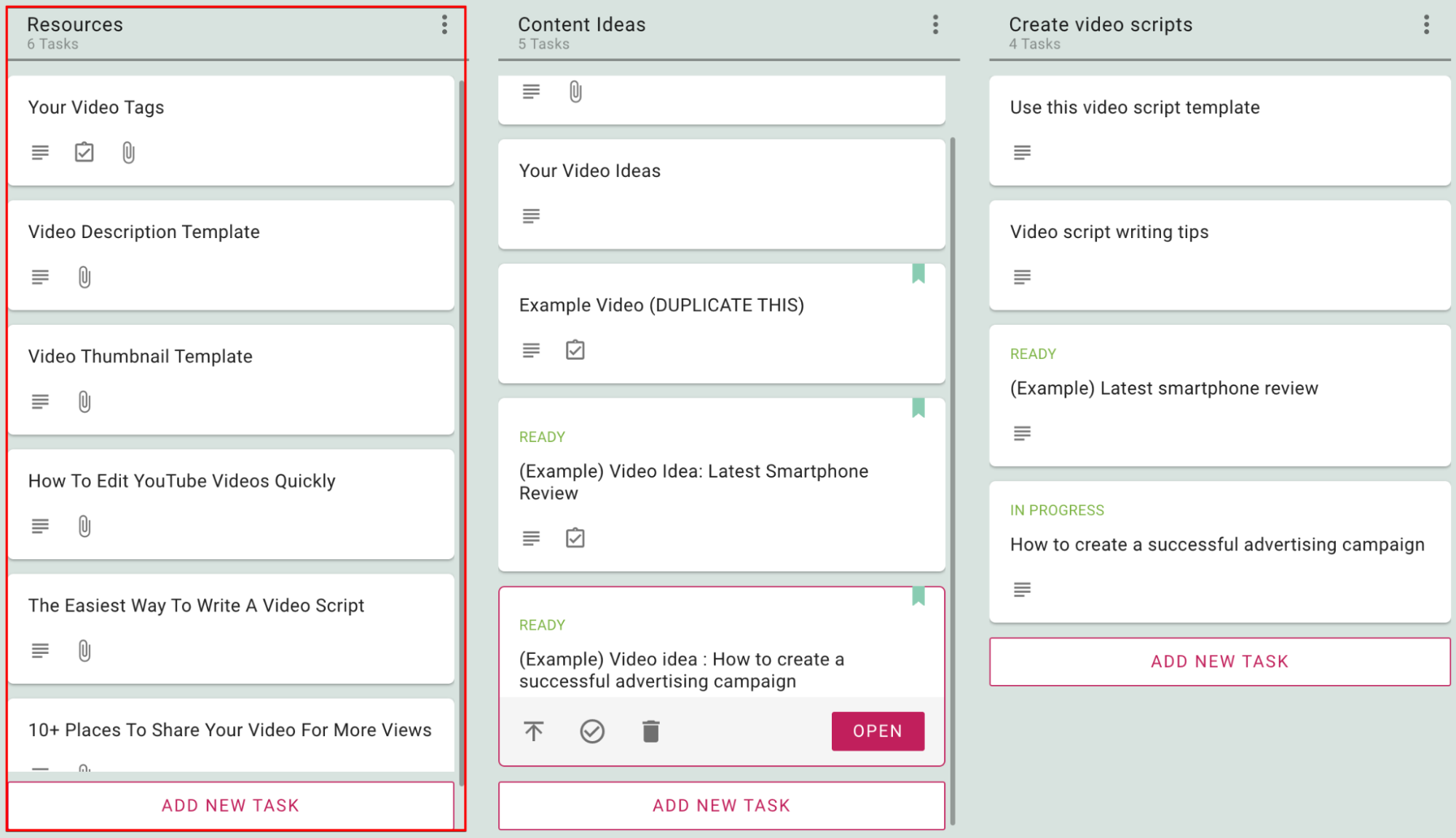
The Resources column, the first in this workflow, contains six cards to help you get started:
Kerika provides you with resources
Video Tags: Tags are important as they help YouTube algorithms understand what your video is about. This influences when your video appears in search results.
Video Description Template: one of the most important things you can do is create descriptive, keyword-rich video titles and descriptions. This will help your videos rank higher in search results and give your audience a better idea of what your video is actually about.
Video Thumbnail Template: Your thumbnail is what appears first on your YouTube channel and in the search results, so it needs to be eye-catching and representative of your video content.
How To Edit YouTube Videos Quickly: All successful YouTubers put a lot of time and effort into their editing because that is what helps them stand out from the crowd. This card has useful links, including some of the best video editing tools.
The Easiest Way To Write A Video Script: Writing a video script for YouTube can be as easy or as difficult as you make it. If you have a clear idea of what you want to say and how you want to say it, the process can be relatively straightforward.
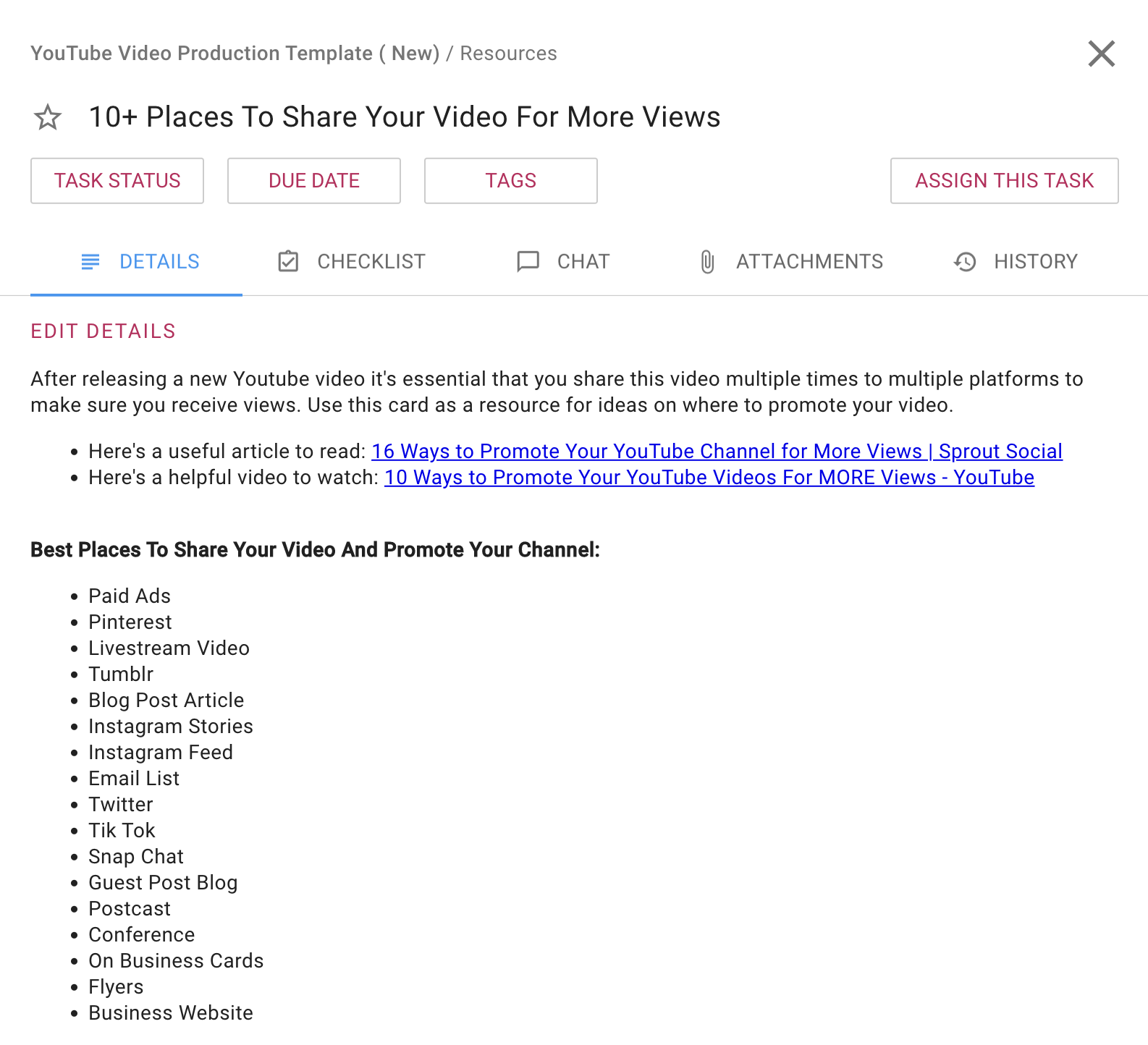
10+ Places To Share Your Video For More Views: Sharing your videos on other platforms lets you borrow their audience and show your content to people who might not have found it otherwise. This helps get more views and subscribers on your channel, which leads to more success on YouTube.
Start Generating Content Ideas
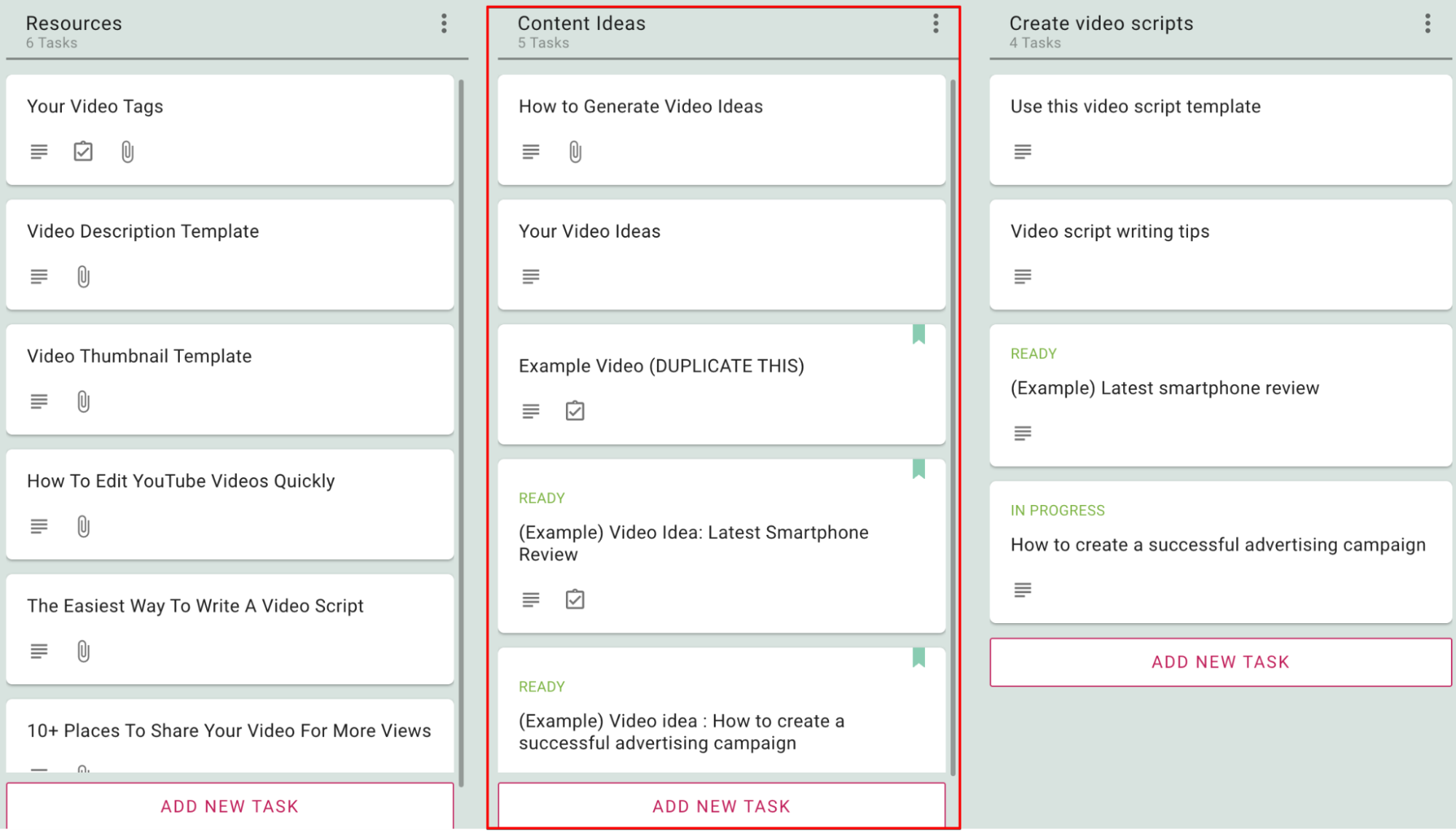
The second column is Content Ideas and it contains five cards:
How to Generate Video Ideas: content ideas are the basis for your YouTube videos, and without a clear idea, it is hard to plan, make, and edit videos that are engaging and effective.
This card will help you generate good video ideas. It gives you useful resources and a list of content ideas that you can use for your videos.
Your Video Ideas: Use this card to keep a list of video content ideas. Remember, no idea is too specific or too vague! Refer to this card when you need a content idea to work on.
Example Video (DUPLICATE THIS): This card will come in handy while writing your video script: it contains a template for writing content that you can duplicate for each of your content ideas and a checklist that divides the script writing process into smaller tasks.
(Example) Video Idea: Latest Smartphone Review is an example of a video idea that discusses the latest smartphones. This video needs a script to educate the viewers about the pros and cons of the latest smartphones launched this year.
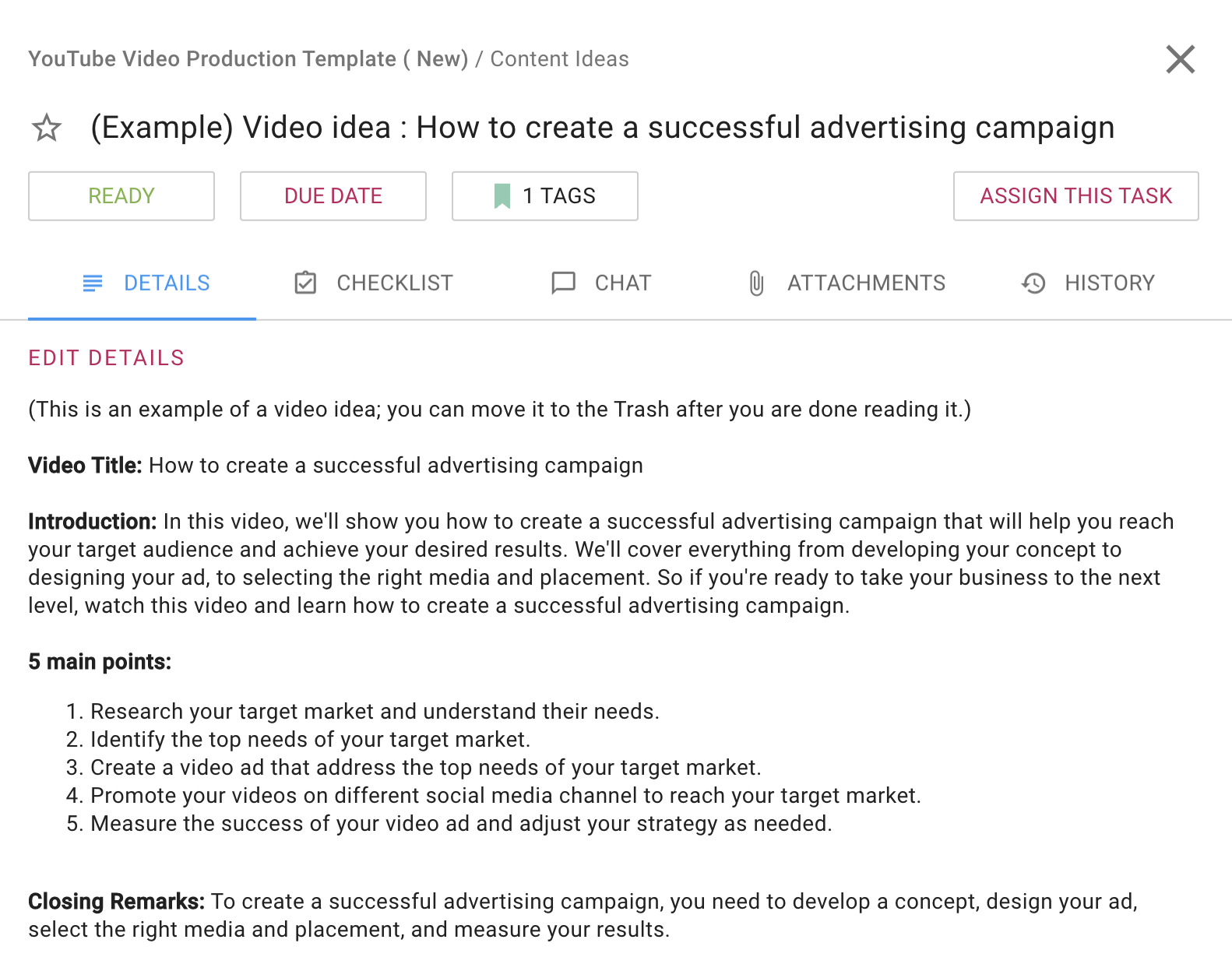
(Example) Video idea: How to create a successful advertising campaign is another example of a video with tips on how to create an advertising campaign:
Create Video Scripts
This column contains two cards:
Create Video Scripts
The first card will save you time by giving you a ready-made format for scripts. It offers a clear and consistent structure for you to follow, which can help organize your script ideas and ensure that you tell the story in the most compelling way possible.
The card also includes guidelines for things like video titles, introduction, body, conclusion, and call to action. It will help you follow industry-standard conventions and make it easy for you to read and follow later on.
The second card will help you write a script that keeps your audience interested and engaged in your content, and this card shares some of the most useful tips to help you with it.
Record & Edit Videos
This column contains two cards:
Record & Edit Videos
The first card helps you understand keyword optimization, which is an important aspect of creating and promoting YouTube videos.This will increase the number of views on your videos, ultimately leading to more engagement.
The second card has useful tips to improve the overall quality of your videos and make them more professional-looking.This will increase the chances that viewers will watch your videos all the way through and even share them with others. Overall, video editing is an important part of creating successful videos on YouTube.
Review Videos
As videos are ready, drag the video card here and assign them to the folks who will be reviewing them, and change the status of the card to NEEDS REVIEW. If you need feedback by a certain date, set the Due Date on this card so people understand its urgency relative to everything else that’s going on.
Schedule & Publish Videos
When a video is ready to be scheduled for publication, move its card here. This makes it easy for everyone to know what the publishing queue looks like.
Finally, Promote Your Video
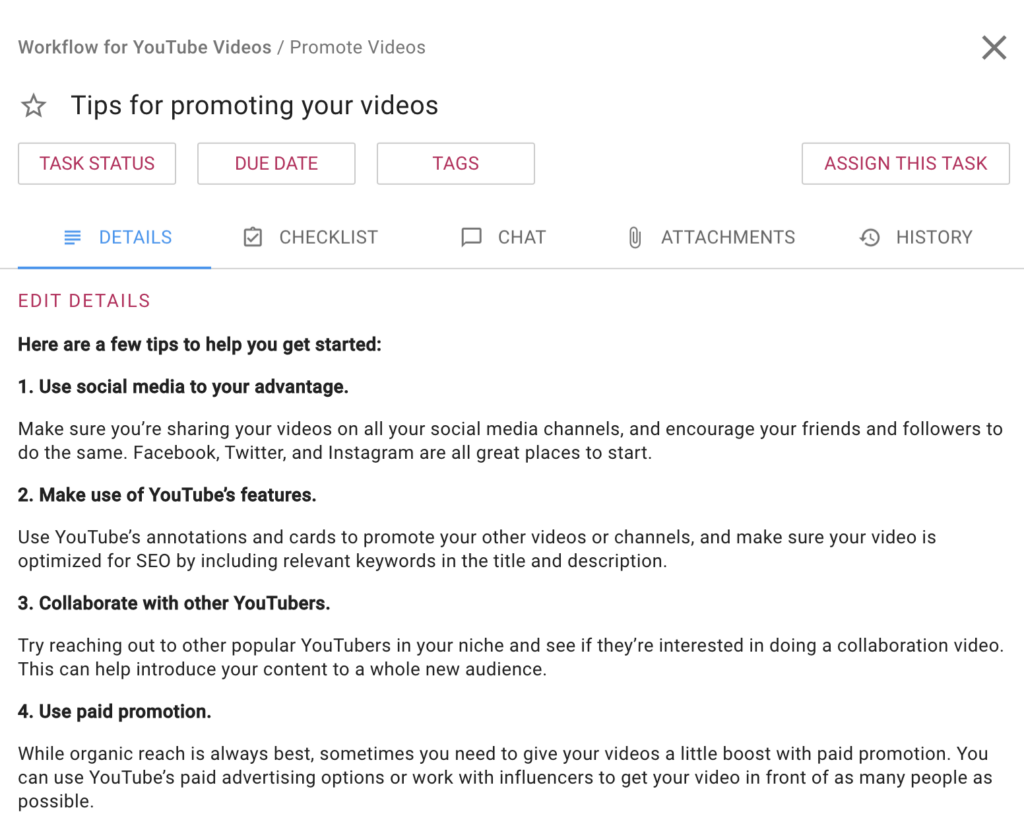
When you promote your videos, you are essentially making people aware of its existence and inviting them to visit and subscribe. This can help attract more viewers and subscribers, which can in turn help your channel grow and become more successful.
We have some tips for you in this template.
Tips for Promoting Videos
Like what you just read?
Here’s the template: just one click, one the USE TEMPLATE button, will set you up with a new Kerika account and your first board, in just seconds.
Click to view this Template
You can try everything free, with your entire team, for 30 days.
A product launch is a critical moment for any company. It is the moment when a new product is introduced to the market and becomes available for purchase. A successful product launch can drive sales, create buzz, and generate excitement for a company and its products.
But before you launch your product, there’s a lot of preparation that needs to happen. Here’s a quick guide to launching your product successfully.
Click to view this Template
Pre-launch preparation.
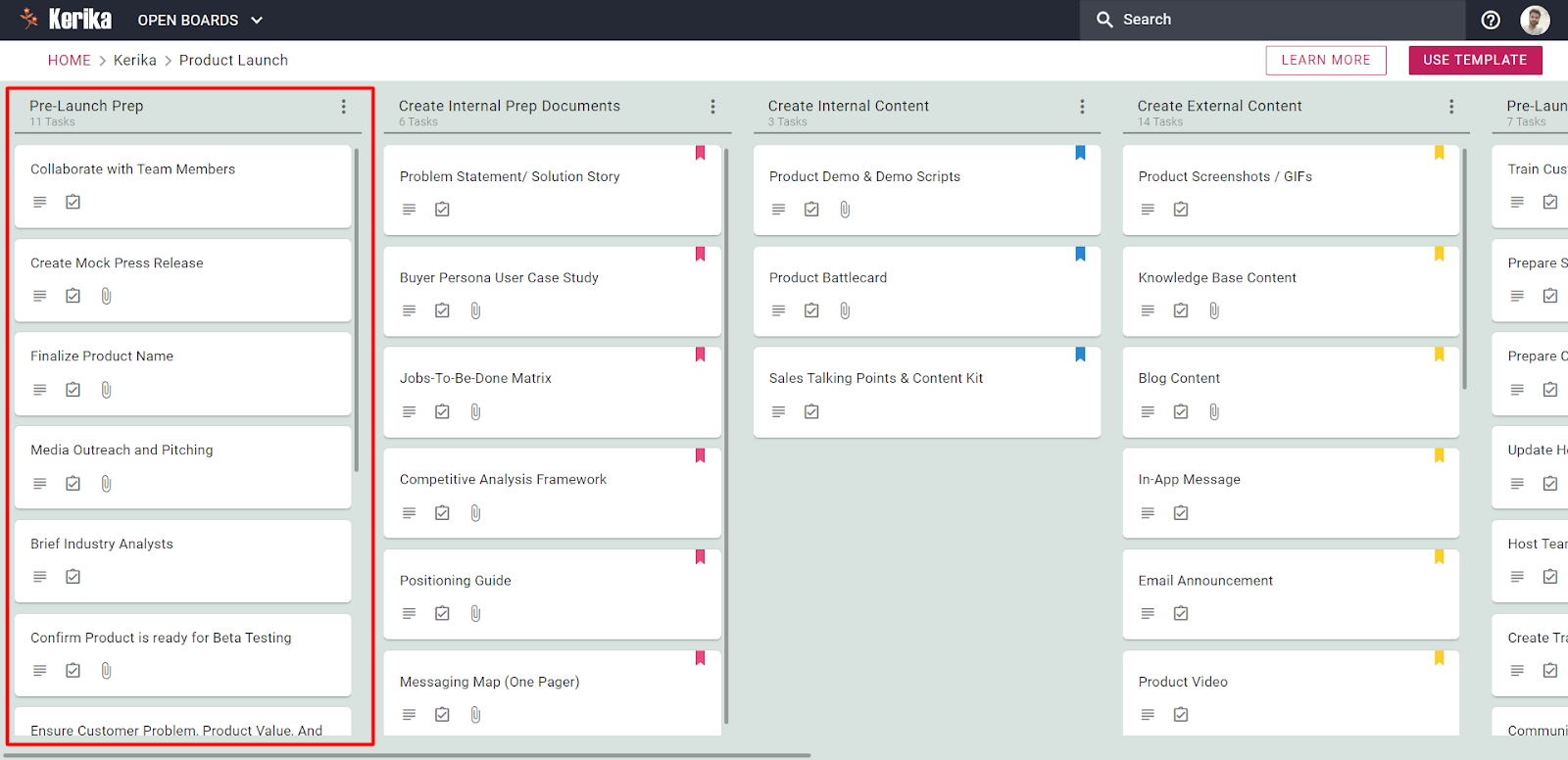
As you prepare for your product launch, there are a few key things to keep in mind. First, you need to make sure that your product is ready for launch.
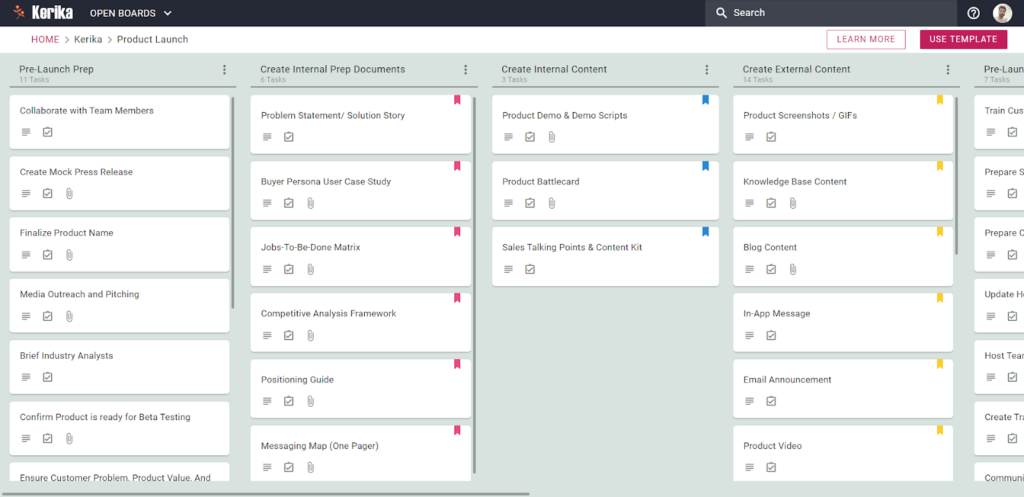
This could include collaborating with team members, creating a mock for a press release, finalizing the product name, planning media outreach and pitching, briefing experts and analysts, and more.
Check out the pre-launch preparation of this company.
Pre-launch Prep
Internal preparation documents:
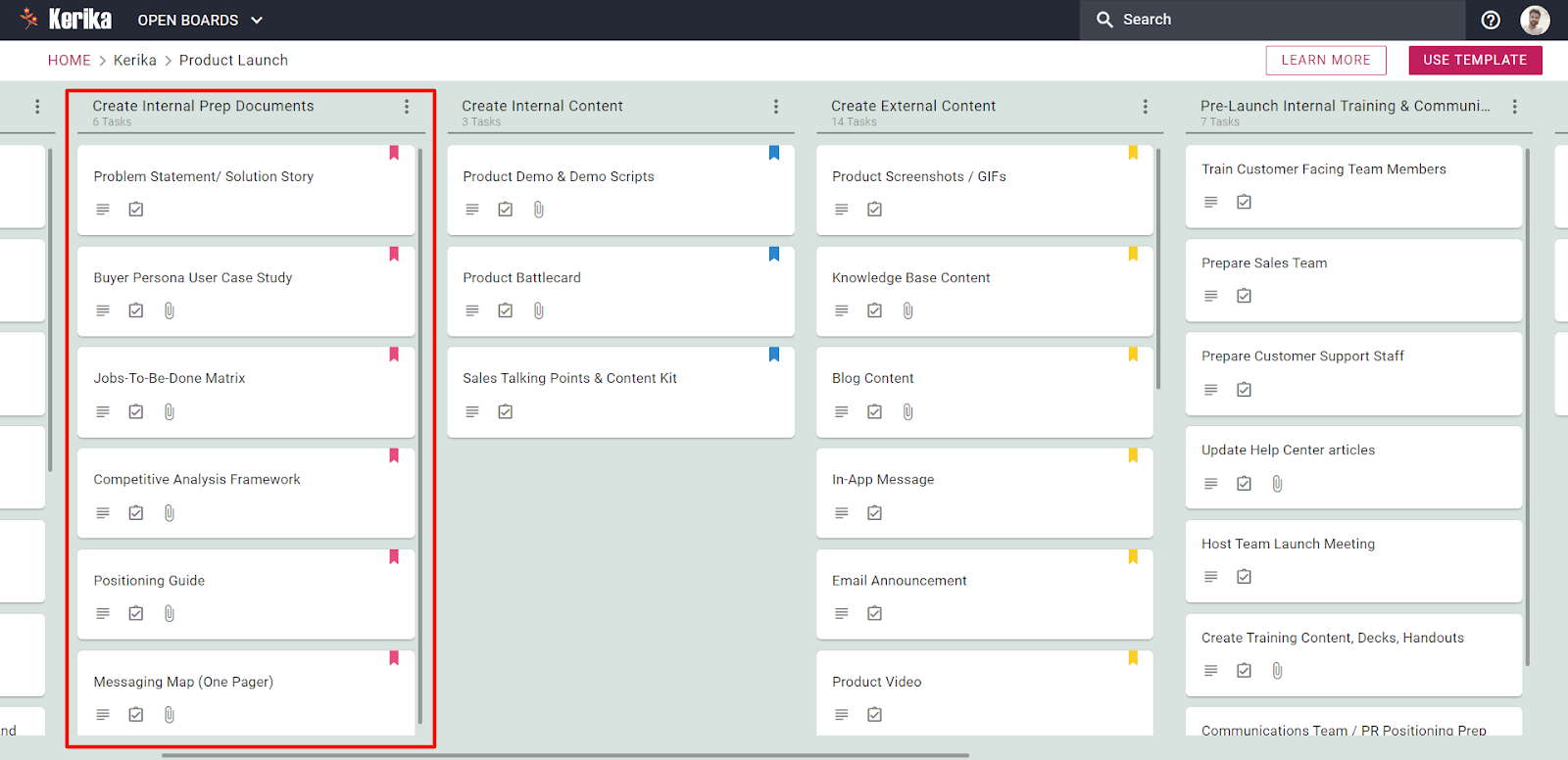
Before launch day, you have to create an Internal preparation document that outlines everything that needs to be done.
It will help you stay organized and on track on the launch day. This prep document could be about what problems your product solves, building a buyer persona, and creating a growth strategy framework.
Internal Prep Documents
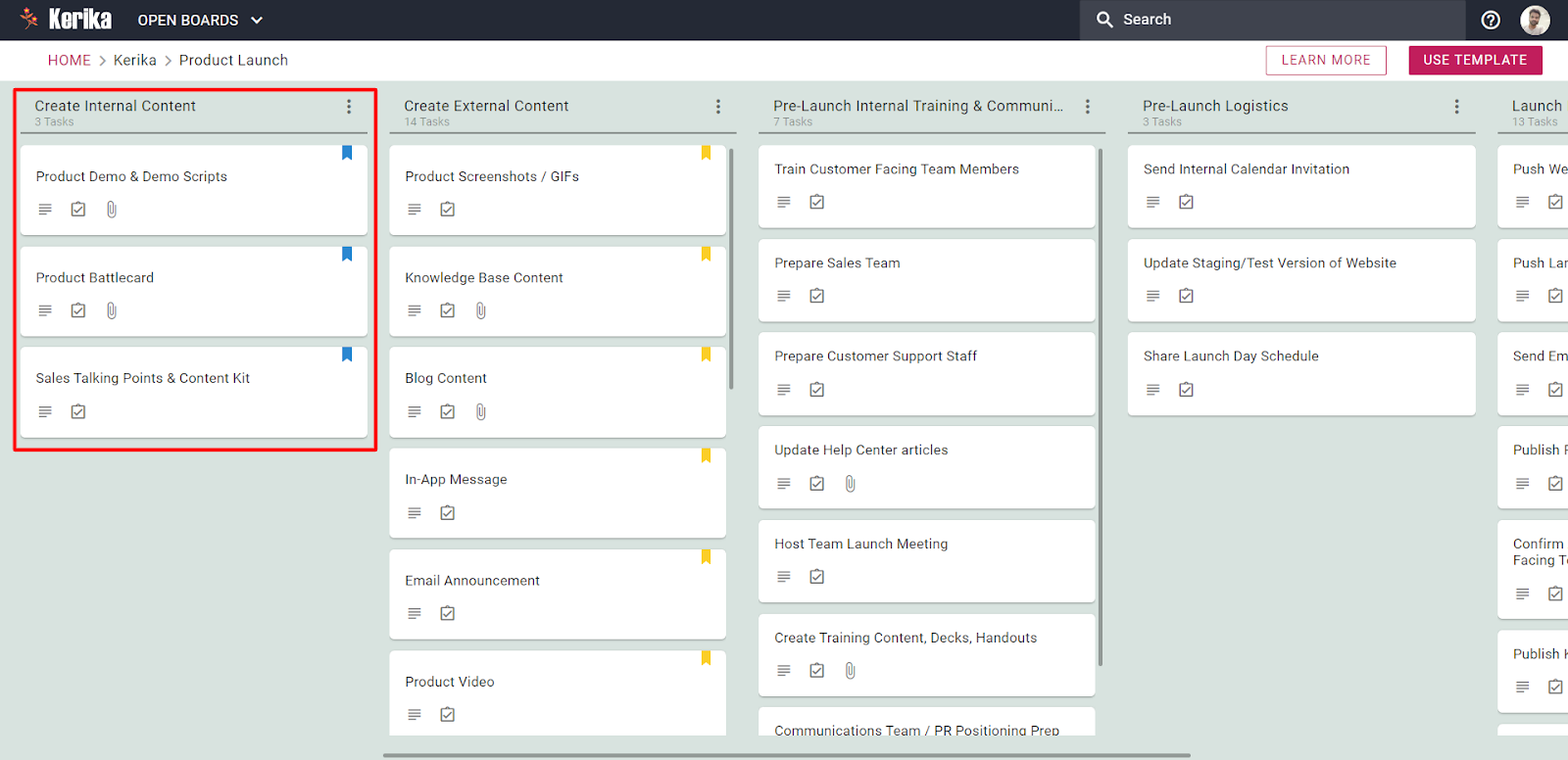
Create internal content.
This could include creating scripts for product demos, product battle cards, and creating content for talking points. This will ensure that your team is prepared for the lunch and ready to answer any questions that come up about the product.
Create Internal Content
Create external content
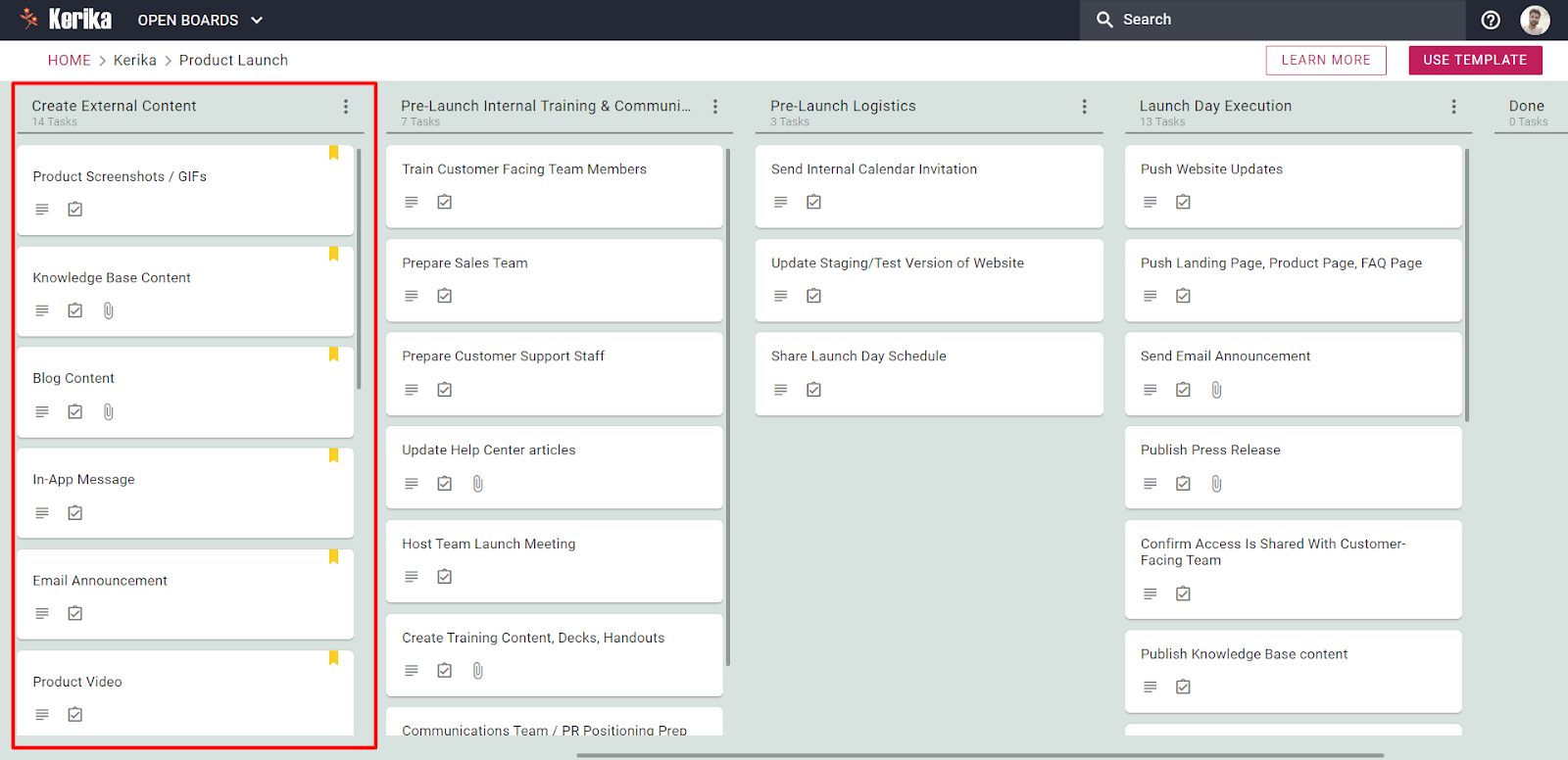
This is the content that will be used to promote your product, like product images and videos, content for the knowledge base, blog content, in-app messages, email announcements, landing page, etc.
Create External Content
Pre-launch internal & communication
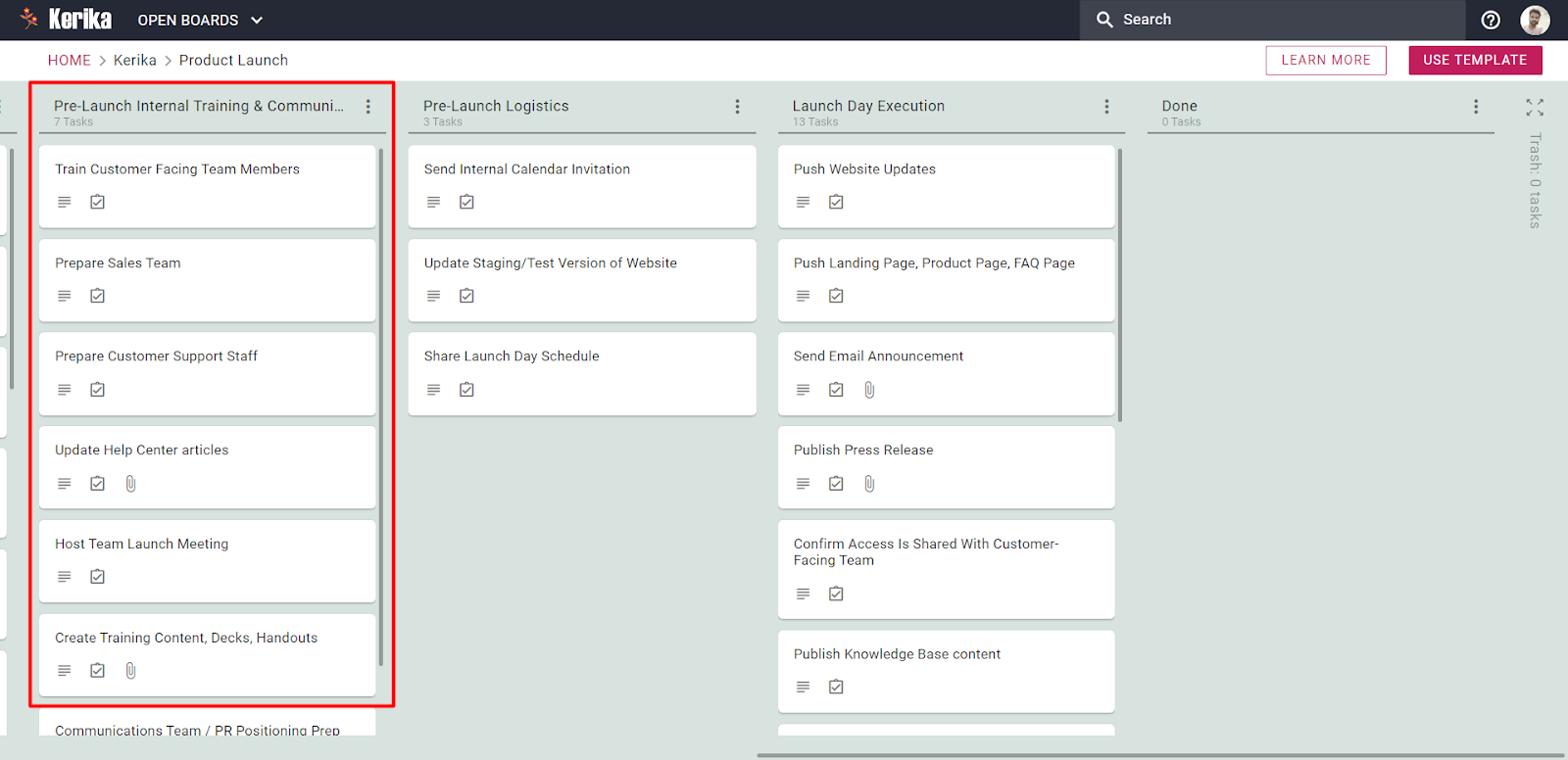
Make sure everyone on your team knows about the product launch and what their role is. This will help prevent any confusion on launch day. This could include preparing the sales team, customer support team, content training, and PR team.
Pre-Launch Internal Training
Pre-launch logistics.
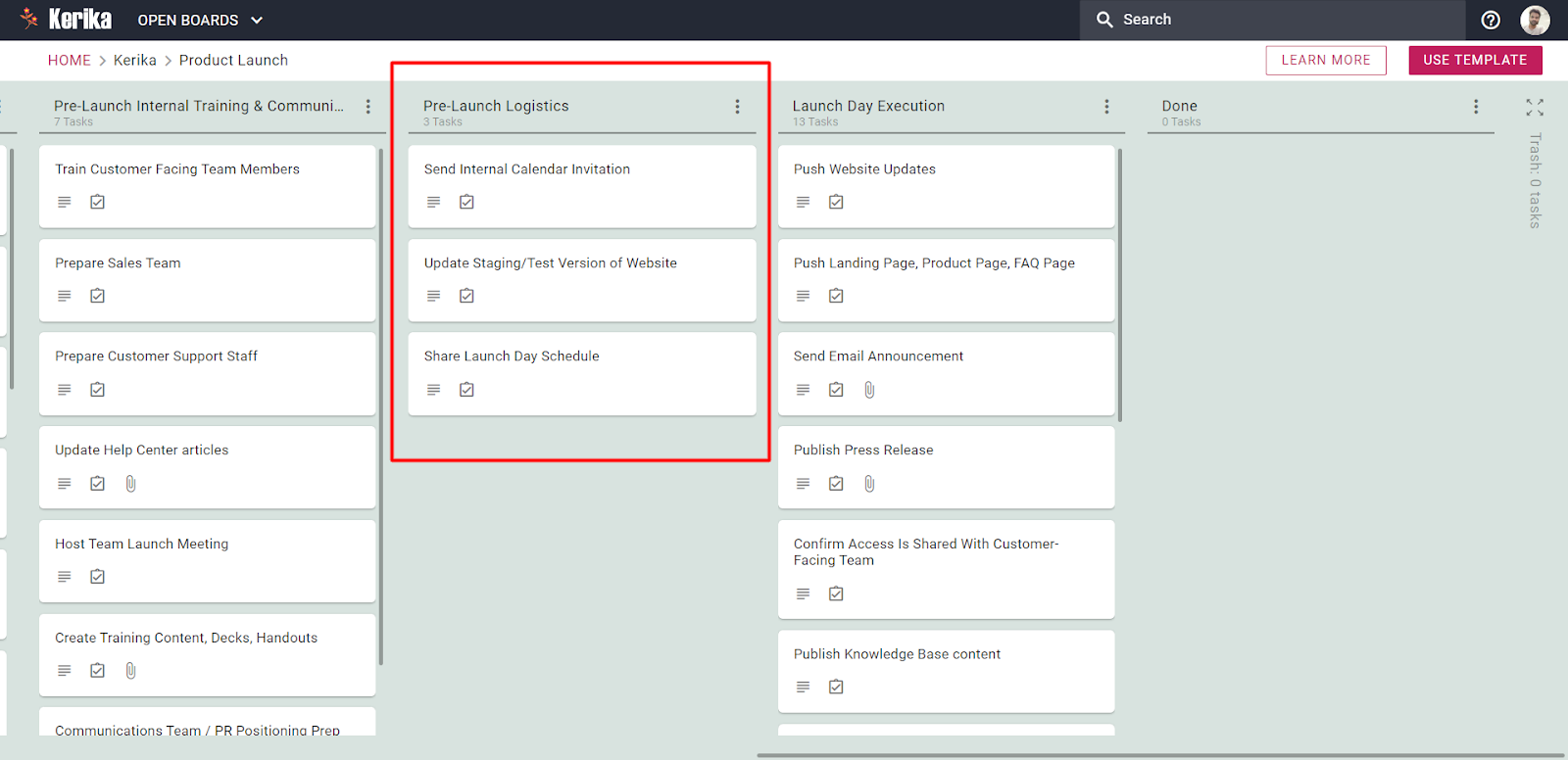
This includes things like sending internal calendar invitations, updating staging/test versions, and sharing the launch day schedule. Basically, everything needs to be done to make sure the launch goes smoothly.
Pre-launch Logistics
Launch day execution.
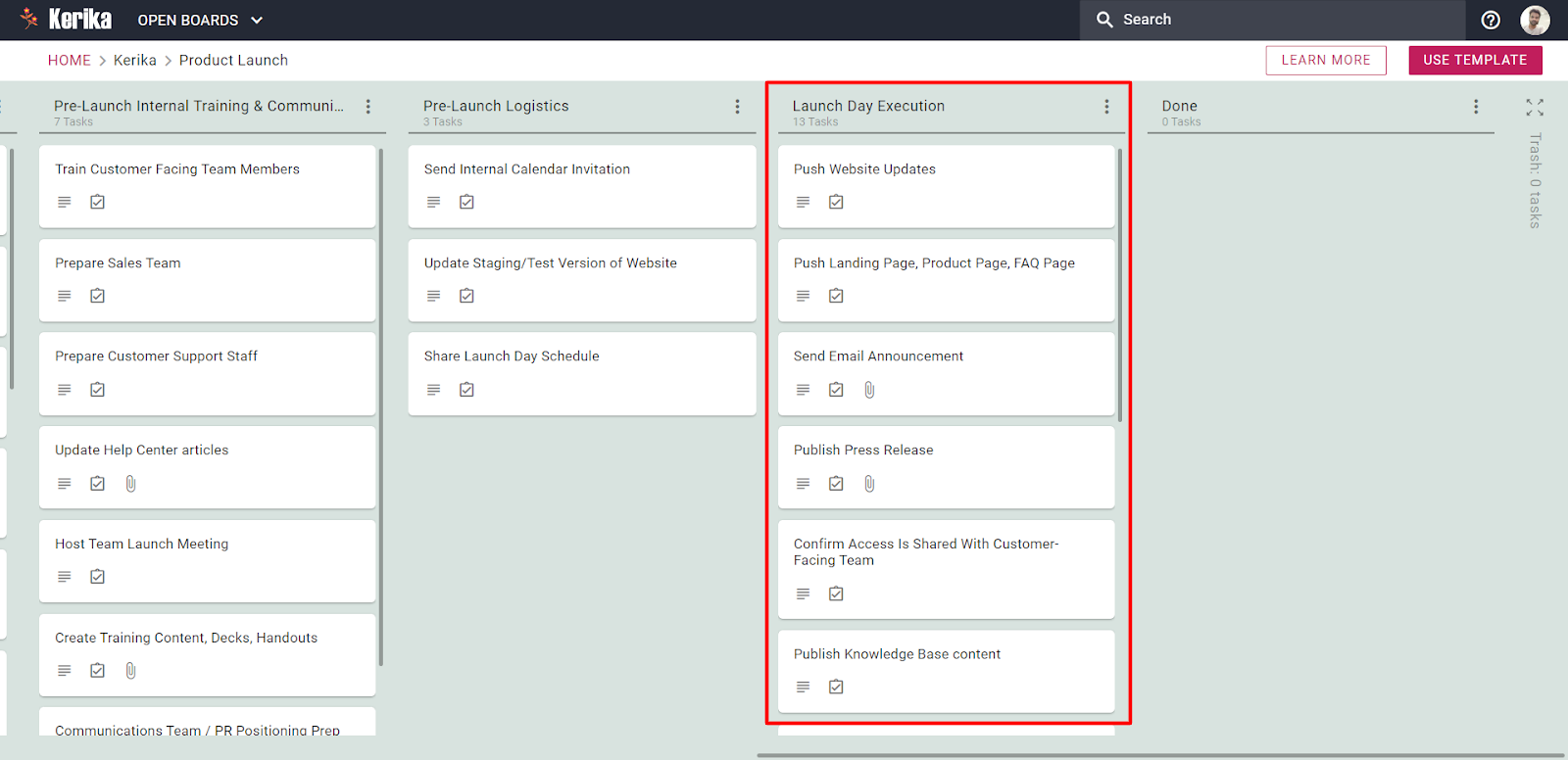
On launch day, make sure everything is ready to go. Do a final check of all your content, make sure your team is prepared, and then go live!
This includes pushing website updates, making landing pages, product pages and FAQ pages live, sending email announcements, pushing press releases, publishing a knowledge base, etc.